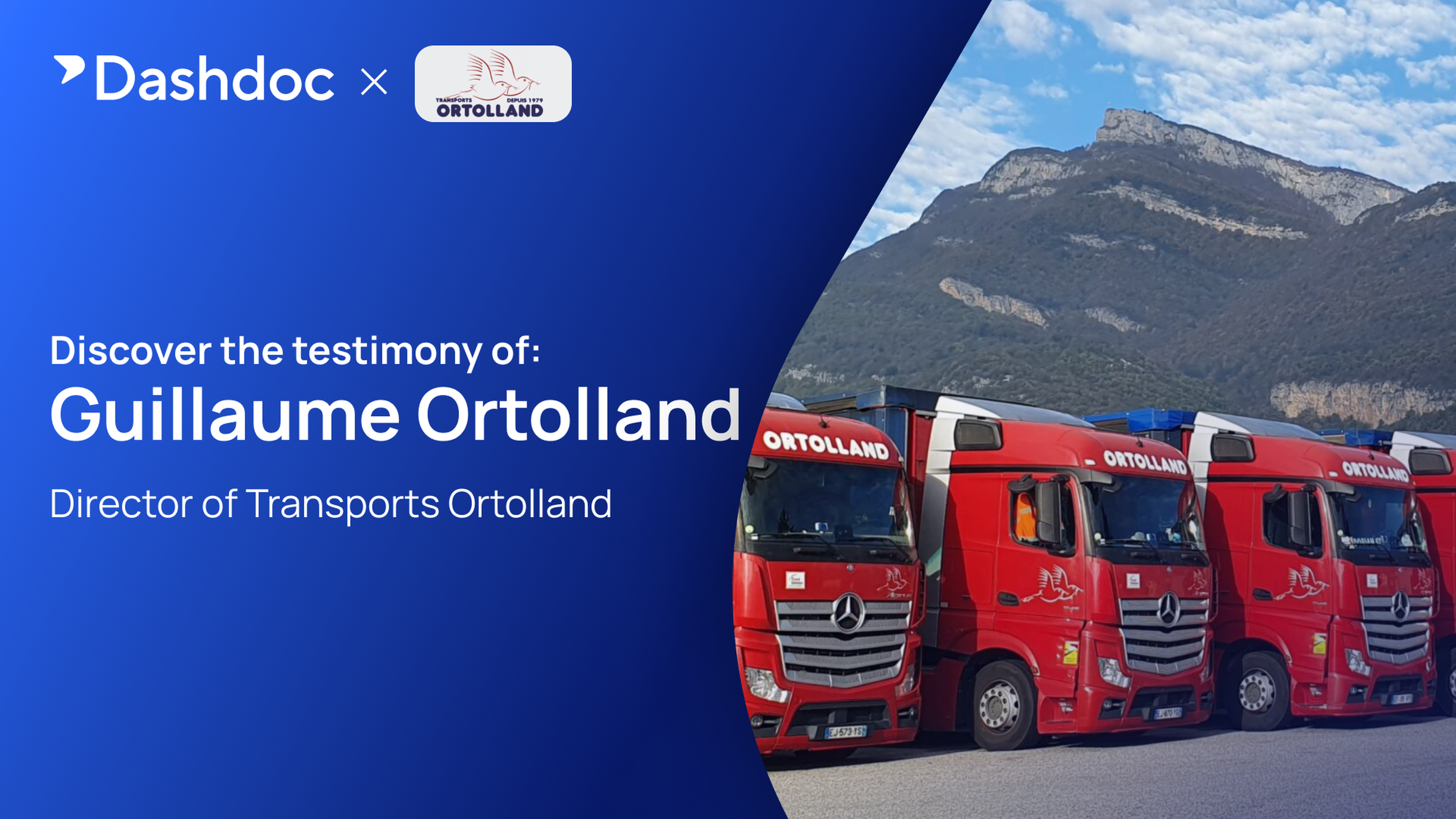
Dashdoc hosted a webinar with its partner Samsara and its customer Transports Ortolland. Ortolland is a family business founded in 1979 in the Savoie region of the French Alps, now run by its third generation and a member of the TRED Union carrier network. Guillaume, CEO of Ortolland, and Henri Bocquillet, project manager at Dashdoc, looked back on the Dashdoc rollout in early 2025 and what it changed for dispatch day to day.
Fleet Management Built on Paper and Phone Calls et des appels téléphoniques
Before 2025, Ortolland relied on outdated tools. Fleet tracking was limited to a location update every five minutes, with no other details on what the vehicle was doing. There was no precise trailer tracking, no reliable data on driver wait times at customer sites, and dispatchers often had to call drivers to find out how a route was going.
We were on a very paper-based system, with very basic GPS tracking that only gave us one location every five minutes. We didn’t have tools precise enough to manage our fleet the way it needs to be managed today.
Guillaume, CEO of Transports Ortolland
All Fleet Data in One TMS
To modernize fleet tracking, Ortolland turned to Samsara, the telematics platform that equips vehicles and sends back their location data. The company then connected this data directly to Dashdoc, so it would have one central tool instead of several disconnected platforms. Dashdoc is the TMS that connects a carrier’s dispatch, admin, and billing, with a driver app for signing eCMRs (electronic consignment notes) directly on a phone and a customer portal that keeps shippers informed in real time.
Trailer tracking also changed daily life for dispatch. A tractor doesn’t always pull the same trailer, and matching the right tractor and trailer used to take several manual adjustments to the schedule every day. Now that the data flows into Dashdoc automatically, this information follows each load directly.
That’s what really changed things for my dispatcher, who manages our relationships with shippers: he no longer has to update the equipment assignment two or three times a day for every load.
The trip planner is another key feature for Ortolland. It groups several loads into a single trip for the driver, with a map that shows drivers’ real-time locations and the loads that still need to be assigned.
For Ortolland’s dispatch team, the result is one tool and one screen to manage the entire fleet.
Today, dispatch works in Dashdoc. All the data that matters to them is now in one place, directly in the platform, in real time: arrivals, departures, and where each vehicle is on its route.
Support Designed as a True Partnership
The rollout took three to four months, including a month of testing before going live. This gave dispatchers time to learn the new tools on their own and gather their questions from the field before Henri Bocquillet came on site. Since going live in April, support has been handled through instant messaging with a France-based team that responds within minutes.
We’re talking minutes, or tens of minutes, never more than an hour. With our old TMS, it was tickets, and we’d wait a day or two for an answer. That makes all the difference for day-to-day dispatch.
For Henri Bocquillet, that responsiveness is essential: in dispatch, you can’t leave a carrier without a TMS for a whole day.
AI That Answers Everyday Questions
Dashdoc also builds AI features directly into daily dispatch work: automated data entry, billing suggestions, and direct answers to questions about the fleet without having to cross-check several reports. For Guillaume, the biggest change is the time saved on requests that seemed minor but used to take several minutes to handle.
I ask directly for the information that matters to me, instead of pulling two or three reports to make my decision.
In Summary
Transports Ortolland has moved from approximate GPS tracking and two-day waits for support tickets to real-time dispatch from a single platform, with support that matches the needs of a fleet its size. This change matters all the more for a third-generation family business, where every minute saved on planning makes a direct difference on the road.
See how Dashdoc and Samsara work together to give your dispatch team real-time visibility.